
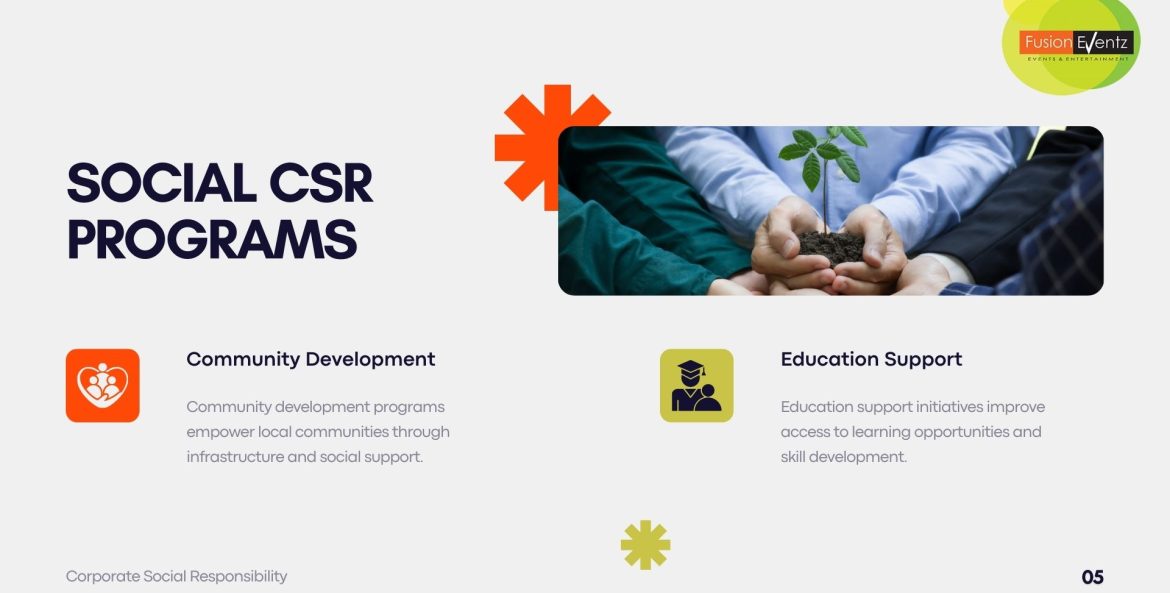
Top CSR Events & Corporate Social Responsibility Activities for Businesses and Organizations
In today’s purpose-driven business environment, CSR Events (Corporate Social Responsibility Events) have evolved from optional philanthropic gestures into strategic business imperatives. Across industries, organizations are increasingly investing in CSR projects for corporates, aligning social impact with brand value, employee engagement, sustainability goals, and ESG compliance.
Whether it’s a corporate social responsibility event, corporate charity event, employee volunteering program, CSR activation campaign, or a corporate sustainability initiative, companies are leveraging structured CSR activities to create measurable impact while strengthening stakeholder relationships.
This comprehensive guide explores everything about CSR events — from types of CSR projects and event ideas to planning, execution, compliance, and measurable impact.
What Are CSR Events?
CSR Events are structured activities organized by companies as part of their Corporate Social Responsibility (CSR) strategy. These events are designed to address social, environmental, educational, or healthcare challenges while engaging employees, customers, and communities.
CSR events can include:
- Corporate charity events
- CSR fundraising events
- Corporate volunteering programs
- Environmental sustainability campaigns
- Tree plantation drives
- Blood donation camps
- Health awareness walkathons
- Education sponsorship drives
- Community development initiatives
- ESG-focused impact programs
For Indian corporates, CSR events also align with the Companies Act, 2013, which mandates eligible companies to spend at least 2% of their average net profits on CSR activities.
Why CSR Events Matter for Corporates
CSR projects are no longer just compliance activities. They contribute to:
1. Brand Reputation & Corporate Image
Strong CSR initiatives enhance corporate reputation management, making businesses more trusted and respected.
2. Employee Engagement & Retention
Employee volunteering activities increase morale and strengthen company culture.
3. ESG & Sustainability Compliance
CSR programs contribute to Environmental, Social, and Governance (ESG) goals, improving investor confidence.
4. Community Development
CSR events support sustainable community development, especially in rural and underserved areas.
5. Stakeholder Trust
Customers increasingly prefer brands involved in social impact initiatives and sustainability programs.
Types of CSR Events & CSR Projects for Corporates
Below are the most popular and searchable CSR event categories adopted by corporates worldwide.
1. Environmental CSR Events
Environmental CSR initiatives are among the most impactful and visible projects.
Common Environmental CSR Activities:
- Tree plantation drives
- Clean-up campaigns (beach clean-up, city clean-up drive)
- Plastic-free campaigns
- Water conservation projects
- Renewable energy awareness programs
- Carbon footprint reduction campaigns
- Green office initiatives
- Sustainability workshops
Keywords used in this segment:
Corporate sustainability programs, environmental CSR initiatives, ESG environmental projects, green CSR events, climate change awareness campaign.
2. Health & Wellness CSR Events
Corporate health initiatives are increasingly popular.
Popular CSR Health Projects:
- Blood donation camp
- Health check-up camp
- Eye check-up drive
- Organ donation awareness campaign
- Cancer awareness walkathon
- Mental health awareness programs
- Corporate wellness events
- Fitness run / charity marathon
These events promote public health awareness and demonstrate corporate commitment to employee and community well-being.
Searchable keywords included:
Corporate health CSR projects, CSR medical camps, corporate wellness CSR event, healthcare CSR initiatives.
3. Education & Skill Development CSR Projects
Education-focused CSR initiatives create long-term social impact.
Common Education CSR Events:
- Scholarship distribution programs
- Digital literacy campaigns
- School infrastructure development
- CSR donation drives for schools
- Skill development workshops
- Vocational training programs
- STEM education support
- Rural education projects
These initiatives align with sustainable development goals and are often included in corporate foundation programs.
Keywords used:
CSR education initiatives, corporate skill development projects, education CSR activities, rural development CSR programs.
4. Employee Volunteering Programs
Employee engagement CSR events are among the most powerful internal impact initiatives.
Examples:
- Employee volunteering day
- Corporate volunteering events
- NGO partnership volunteering drives
- Corporate social responsibility day
- Community service day
- Team-building CSR activities
These initiatives improve teamwork while contributing to meaningful social change.
Search terms included:
Corporate volunteering programs, employee engagement CSR activities, team-building CSR events, employee social impact initiatives.
5. CSR Fundraising & Charity Events
Corporate fundraising events help mobilize resources for social causes.
Examples:
- Charity gala dinner
- Fundraising walkathon
- Corporate charity run
- Donation drives
- Virtual fundraising campaigns
- CSR auction events
These events generate funds for NGOs, hospitals, disaster relief programs, and education foundations.
Keywords used:
Corporate fundraising events, CSR charity events, corporate donation drives, fundraising CSR campaigns.
6. Women Empowerment & Social Equality CSR Events
Corporates increasingly focus on diversity, inclusion, and gender equality.
Popular CSR Initiatives:
- Women empowerment workshops
- Self-defense training programs
- Financial literacy programs
- CSR programs for girl child education
- Inclusion awareness campaigns
- Diversity & inclusion CSR initiatives
Search terms included:
Women empowerment CSR projects, diversity and inclusion CSR events, corporate social equality initiatives.
7. Rural Development CSR Projects
Rural CSR programs aim at sustainable community growth.
Examples:
- Village adoption programs
- Sanitation drives
- Drinking water projects
- Rural health camps
- Agricultural support initiatives
Keywords used:
Rural development CSR initiatives, community development CSR programs, village upliftment CSR projects.
How to Plan a Successful CSR Event
Organizing impactful CSR events requires strategic planning.
Step 1: Define CSR Objectives
Clearly outline:
- Social cause
- Target beneficiaries
- Expected measurable outcomes
- Alignment with corporate values
Step 2: Partner with NGOs or CSR Event Management Companies
Many corporates collaborate with:
- Nonprofit organizations
- CSR consulting firms
- CSR event management agencies
- Social impact consultants
These partnerships ensure compliance and proper impact measurement.
Step 3: Budget & Compliance Planning
Ensure:
- Proper CSR fund allocation
- Compliance documentation
- Impact reporting
- Audit-ready financial transparency
Step 4: Employee & Stakeholder Engagement
Promote CSR events internally through:
- Internal newsletters
- HR campaigns
- Social media promotion
- Corporate website updates
Step 5: Measure CSR Impact
Use metrics such as:
- Number of beneficiaries
- Volunteer hours
- Funds raised
- Trees planted
- Community reach
Impact reporting strengthens ESG reporting frameworks.
CSR Events & ESG Integration
Modern CSR events align closely with ESG (Environmental, Social, Governance) strategies.
ESG Integration Includes:
- Carbon neutrality initiatives
- Sustainable procurement policies
- Diversity & inclusion programs
- Ethical governance compliance
- Transparent CSR reporting
Companies increasingly publish CSR annual reports and sustainability reports showcasing impact data.
Emerging Trends in CSR Events
CSR is evolving rapidly. Here are key trends:
1. Virtual CSR Events
Online fundraising campaigns, virtual volunteering, and digital awareness drives.
2. Impact-Based CSR Projects
Corporates focus on measurable, long-term social change.
3. SDG-Aligned CSR Programs
CSR events aligned with United Nations Sustainable Development Goals (SDGs).
4. Tech-Enabled CSR
Using apps, digital dashboards, and impact-tracking software.
5. Employee-Led CSR Initiatives
Empowering employees to propose and lead CSR projects.
Benefits of Hiring CSR Event Management Companies
Professional CSR event planners help corporates with:
- End-to-end event execution
- Government compliance
- NGO coordination
- Budget optimization
- Reporting & documentation
- CSR marketing & PR
They ensure seamless planning for corporate social impact events.
Challenges in CSR Event Management
Despite benefits, corporates face challenges:
- Measuring real impact
- Compliance complexities
- Employee participation levels
- Budget constraints
- Sustaining long-term initiatives
Strategic planning and professional CSR consultants can overcome these challenges.
The Future of CSR Events
CSR events are becoming more strategic and data-driven. Companies are shifting from one-time charity events to long-term CSR projects, integrated with sustainability goals and brand positioning.
Future CSR strategies will focus on:
- Sustainable impact measurement
- Climate action initiatives
- Circular economy models
- Inclusive workforce development
- Public-private partnerships
CSR events will increasingly serve as platforms for shared value creation, where business success and social progress go hand in hand.
Conclusion
CSR Events are powerful tools that enable corporates to drive meaningful social change while strengthening brand identity, employee engagement, and ESG performance. From environmental sustainability programs and health awareness campaigns to education CSR initiatives, rural development projects, and corporate volunteering events, CSR activities have become essential to modern business strategy.
By investing in well-structured CSR projects for corporates, companies not only fulfill compliance requirements but also create lasting positive impact on society.
In an era where stakeholders demand transparency and responsibility, CSR events represent the bridge between corporate growth and community development — making them indispensable for forward-thinking organizations.